The practice
The image is built backwards.
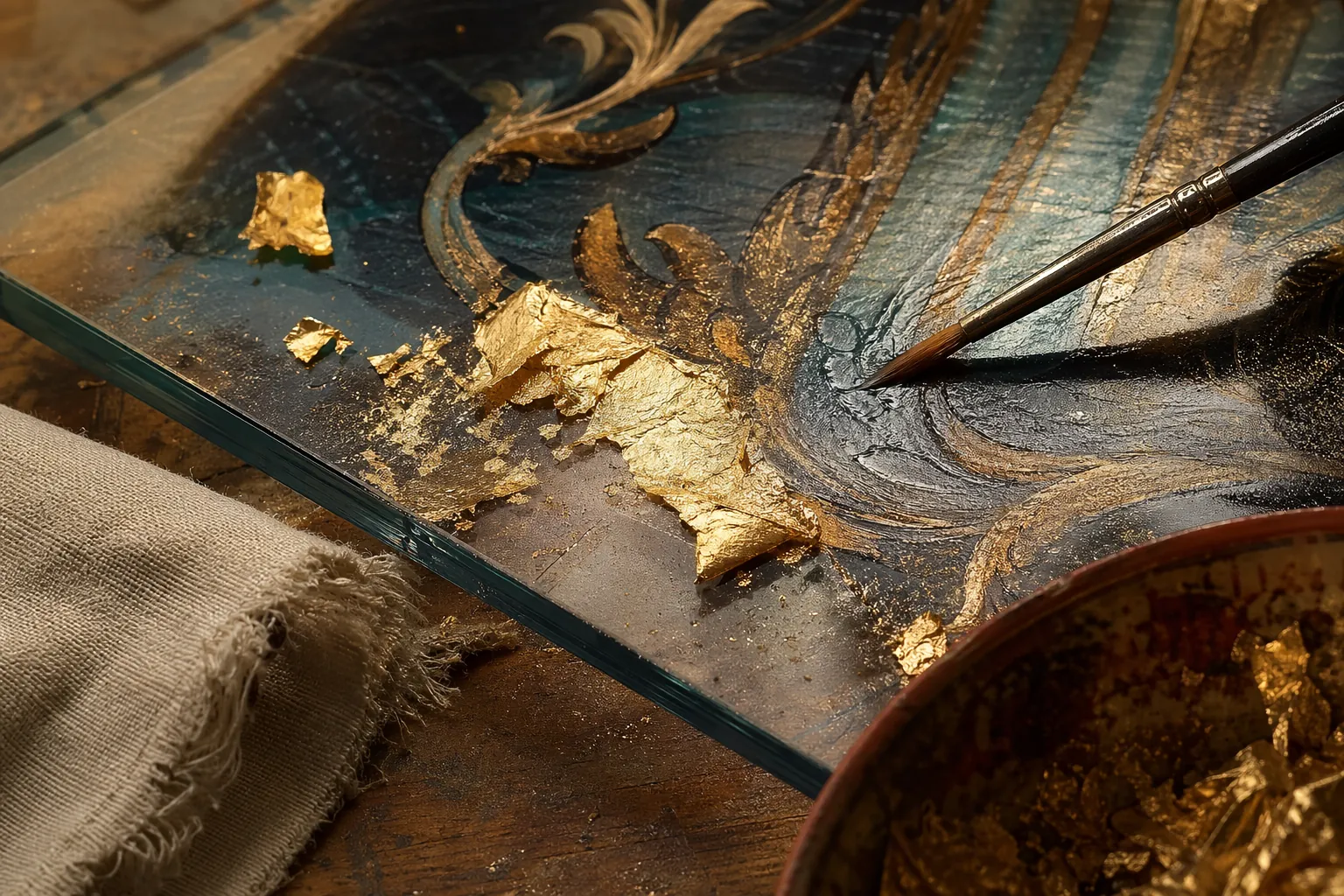
Reverse glass painting replaces revision with sequence. What the viewer will see first must be painted first, then sealed beneath every layer that follows.
The sequence
Four decisions, made in one direction.
Scroll, and one panel of glass takes its layers in the order the studio paints them.
Layer 01 of 04Line
Layer 01
Line
Highlights, fine lines, lettering, and the smallest points of focus are committed to the clear glass before the broader image exists. In a lattice piece this is the whole black net, drawn by hand in one pass.
Layer 02
Color
Transparent and opaque color passes are added behind those first marks. Every new layer seals the one before it, so the sequence of painting becomes the depth the viewer sees.
Layer 03
Ground
The backing arrives last. It gives the image its contrast and its relationship to the wall behind it. Some panels stay open so daylight passes straight through.
Layer 04
Light
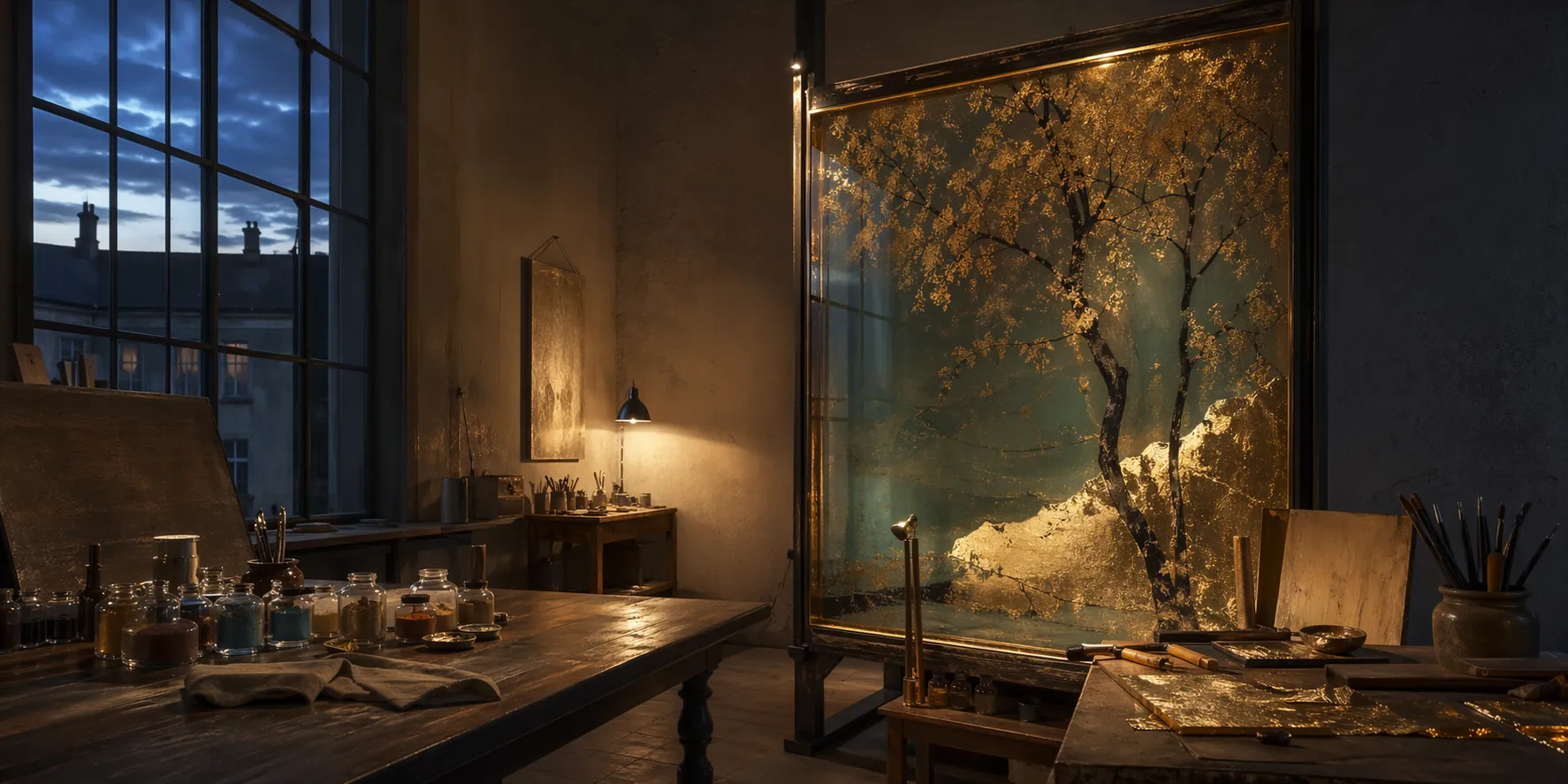
Daylight, lamplight, reflection, and distance finish the work differently in every room. Placement is part of the composition, which is why the studio asks about the room first.
A discipline of consequence.
There is no useful way to scrape back to the first line once the painting has grown behind it. The medium rewards forethought, clean edges, and the confidence to leave a decision intact.
That constraint is also what creates the depth: the finished surface stays protected behind glass while light moves across it.